Phase Change Materials (PCMs): What They Are and How They’re Revolutionising Cold Chain Management in Australia
When it comes to keeping temperature-sensitive products safe during transport and storage, the packaging materials you choose can make or break the cold chain. In recent years, Phase Change Materials (PCMs) have emerged as one of the most powerful and versatile tools available to Australian food businesses, pharmaceutical distributors, and cold chain operators. But what exactly are PCMs, how do they work, and which solution is right for your business? This guide breaks it all down.
What Are Phase Change Materials (PCMs)?
A Phase Change Material is a substance that absorbs and releases large amounts of thermal energy as it transitions between physical states — most commonly from solid to liquid and back again. This transition happens at a specific, predictable temperature, which is what makes PCMs so useful for cold chain applications.
Think of it this way: when ice melts, it absorbs heat from its surroundings without actually getting warmer itself — it stays at 0°C until it has fully melted. That’s a PCM in action. The same principle applies to engineered PCMs, which can be formulated to hold a specific target temperature for hours or even days, far longer than conventional ice or standard gel packs.
This ability to maintain a stable temperature without mechanical refrigeration makes PCMs ideal for passive cold chain packaging — the kind used in insulated shipping boxes, thermal pallet covers, and cold chain liners.
The Three Main Types of PCMs Used in Cold Chain
Not all PCMs are the same. They are broadly classified into three categories, each with different properties and cold chain applications:
1. Organic PCMs
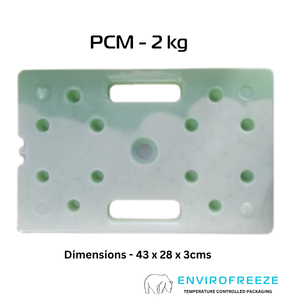
Organic PCMs — primarily paraffin waxes and fatty acids — are the most widely used in cold chain packaging. They are chemically stable, non-corrosive, non-toxic, and can be engineered to change phase at almost any target temperature. Paraffin-based PCMs are commonly used in insulated mailers and gel pack-style coolant panels for food delivery and pharmaceutical shipments. Their predictable performance and long cycle life make them a reliable choice for repeatable cold chain operations.
2. Inorganic PCMs
Inorganic PCMs — primarily salt hydrates — offer higher thermal energy storage density than organic alternatives, meaning they can absorb and hold more heat per kilogram. They also tend to be less expensive. However, salt hydrates can suffer from supercooling and phase separation over repeated cycles, which makes them less suitable for high-precision cold chain applications unless carefully encapsulated. They are commonly used in larger-scale storage applications such as refrigerated warehousing and transport containers.
3. Eutectic PCMs
Eutectic PCMs are blends of two or more substances — organic, inorganic, or both — that melt and freeze together at a precise, fixed temperature. Because their transition temperature can be tuned very accurately during formulation, eutectic PCMs are especially valuable for pharmaceutical cold chains where products must be kept within a very narrow temperature window (such as +2°C to +8°C for vaccines and biologics). They are increasingly being incorporated into high-performance cold chain packaging panels and insulated shippers.
How PCMs Work in Cold Chain Packaging
The science behind PCMs in cold chain packaging is straightforward, but the results are impressive. Here’s how a typical PCM-based cold chain packaging system works:
- Pre-conditioning: The PCM panels or packs are conditioned (frozen or chilled) to the correct temperature before use — either in a freezer or refrigerator depending on the target temperature.
- Loading: The conditioned PCM panels are placed inside the insulated packaging alongside the temperature-sensitive product.
- In transit: As ambient heat tries to enter the package, the PCM absorbs that heat energy during its phase transition from solid to liquid — maintaining a stable internal temperature without any power source.
- Temperature hold: The PCM continues to hold the target temperature until it has fully changed phase. The duration of protection depends on the amount of PCM, the quality of insulation, and the ambient conditions.
- Reuse: Once delivered, the PCM panels can be re-conditioned and used again — making them significantly more sustainable than single-use ice or dry ice alternatives.
This passive cooling approach requires no electricity during transport, making it ideal for last-mile delivery in remote Australian regions where refrigerated vehicles may not be practical or cost-effective.
Key Applications of PCMs in Australian Cold Chain Management
Food and Beverage Delivery
Australia’s booming meal kit and direct-to-consumer food delivery market has driven rapid adoption of PCM-based cold chain packaging. Unlike wet ice (which melts and creates moisture damage) or dry ice (which requires handling precautions), PCM gel packs and panels provide clean, consistent cooling at a precise temperature. For chilled products that must stay between +2°C and +8°C, or frozen goods that must stay below -18°C, PCMs can be formulated to hold exactly those ranges throughout the entire delivery journey — whether it’s a same-day metro delivery or a two-day regional shipment.
Pharmaceutical and Vaccine Distribution
The pharmaceutical cold chain has some of the strictest temperature requirements of any industry. Vaccines, biologics, and temperature-sensitive medications must remain within a defined temperature range from manufacture to patient — any excursion can render a product ineffective or unsafe. PCMs, particularly eutectic blends engineered for the +2°C to +8°C range, are now widely used in pharmaceutical shipping boxes, vaccine carriers, and temperature-controlled pallet shippers. Their ability to buffer temperature fluctuations — such as when a shipment sits on a loading dock in the Australian summer heat — is critical for maintaining product integrity.
Seafood, Meat, and Dairy
For producers and distributors of high-value perishables like fresh seafood, premium cuts of meat, and dairy products, temperature excursions don’t just mean spoilage — they mean lost revenue and potential food safety incidents. PCM-lined insulated boxes and thermal pallet covers allow these products to be transported across long Australian distances while maintaining the consistent chill temperature required under the Food Standards Australia New Zealand (FSANZ) framework. PCMs are especially valuable for air freight, where dry ice sublimation can be problematic on longer flights.
Floral and Horticultural Products
Cut flowers, live plants, and horticultural exports require careful temperature management — not too cold (which causes freeze damage) and not too warm (which accelerates wilting and decay). PCMs with transition temperatures in the +8°C to +15°C range are ideal for this application, providing a gentle, stable cool environment that extends shelf life without the risk of freezing. For Australian exporters shipping flowers to Asian markets, PCM packaging can be the difference between arriving fresh and arriving damaged.
E-Commerce and Last-Mile Delivery
As online grocery and specialty food shopping continues to grow across Australia, the challenge of maintaining the cold chain all the way to the consumer’s doorstep has become critical. PCM-based insulated mailers and liners provide a practical, scalable solution for e-commerce food businesses — delivering reliable temperature protection without requiring refrigerated vehicles or specialised courier networks. The reusable nature of many PCM products also aligns with the growing consumer expectation for sustainable packaging.
PCMs vs Traditional Cold Chain Methods: How Do They Compare?
Understanding where PCMs sit relative to other cold chain cooling methods helps businesses choose the right tool for each application:
| Method | Temperature Control | Duration | Reusable | Best For |
|---|---|---|---|---|
| Wet Ice | 0°C (melting point only) | Short | No | Short local deliveries |
| Dry Ice | -78°C (sublimation) | Medium | No | Frozen goods, air freight |
| Standard Gel Packs | 0°C (basic formulation) | Medium | Yes | General chilled delivery |
| PCM Panels/Packs | Tunable to any target temp | Long | Yes | Precision cold chain, pharma, food |
| Refrigerated Vehicles | Continuous active cooling | Unlimited | N/A | High-volume distribution |
PCMs sit in the sweet spot between basic gel packs and expensive refrigerated transport — offering precision temperature control, long hold times, and reusability at a practical cost point for most food and pharmaceutical businesses.
Sustainability and the Future of PCMs in Australia
One of the most compelling reasons Australian businesses are turning to PCMs is their sustainability credentials. Unlike single-use ice or dry ice, PCM panels can be reconditioned and reused hundreds of times, significantly reducing packaging waste. Many organic PCMs are also derived from renewable plant-based sources (such as coconut or palm kernel fatty acids), making them a greener alternative to petroleum-based coolants.
The global PCM market reflects this momentum. The phase change materials market was valued at USD 729.76 million in 2025 and is projected to reach USD 1.64 billion by 2030 — a compound annual growth rate of 17.58% — driven largely by cold chain logistics, pharmaceutical distribution, and sustainability mandates.
In Australia, this aligns with the Australian Packaging Covenant Organisation (APCO) targets for 2025 and beyond, which push businesses to reduce single-use packaging waste and transition to reusable or recyclable alternatives. PCM-based cold chain packaging ticks both boxes.
Looking ahead, innovations in bio-based PCMs, microencapsulation technology, and smart PCM systems (integrated with temperature data loggers) are set to make PCM-based cold chain packaging even more effective and accessible for Australian businesses of all sizes.
Frequently Asked Questions About Phase Change Materials
What temperature do PCMs work at?
PCMs can be engineered to change phase at almost any target temperature — from below -30°C for deep-frozen applications all the way up to +60°C for warm-chain uses. In cold chain packaging, common target temperatures include -21°C (frozen), -18°C (frozen food), 0°C (chilled), +5°C (pharmaceutical), and +15°C (floral/horticultural).
How long do PCMs maintain temperature?
Duration depends on the amount of PCM used, the quality of the insulation surrounding it, and the ambient temperature conditions. In a well-designed insulated packaging system, PCMs can maintain their target temperature for 24 to 96 hours — and in some high-performance systems even longer.
Are PCMs safe for food contact?
Most PCMs used in cold chain packaging are contained within sealed pouches or panels and do not come into direct contact with food. The outer materials (typically food-safe polyethylene or foil pouches) are the contact surface. Always confirm food-safe certification with your supplier when selecting PCM products for direct food contact applications.
Can PCMs replace refrigerated transport entirely?
For many last-mile and e-commerce delivery applications, yes — PCM-based passive cold chain packaging can replace the need for refrigerated vehicles. However, for high-volume distribution over extended distances, a combination of refrigerated transport and PCM packaging (as a backup buffer) typically provides the best result.
Are Envirofreeze products PCM-based?
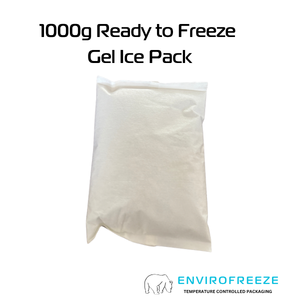
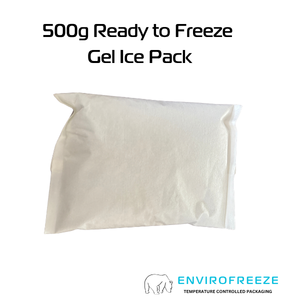
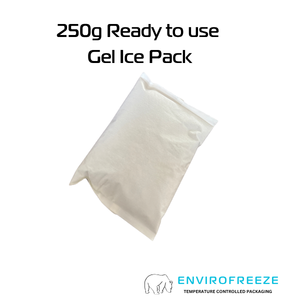
Yes. Envirofreeze’s range of dry ice packs, gel packs, and insulated packaging products incorporate PCM technology to deliver reliable, passive temperature control for Australian food businesses and cold chain operators. Our products are designed and validated for Australian conditions — from tropical North Queensland to the heat of outback delivery routes. Contact our team to discuss the right PCM solution for your cold chain.
Where can I buy PCM cold chain packaging in Australia?
Envirofreeze supplies PCM-based cold chain packaging products across Australia, including insulated mailers, dry ice packs, gel packs, and thermal pallet covers. Browse our range at envirofreeze.com.au/shop or call us on 1300 282 796.
Meta description: Learn what Phase Change Materials (PCMs) are and how they’re used in cold chain management in Australia. Discover the types, applications, and benefits of PCM packaging for food, pharma, and e-commerce businesses.