Cold Chain Packaging for Food Businesses in Australia: A Complete Guide
Cold chain packaging for food businesses in Australia is one of those things that sounds complicated until you’ve worked with it — then it becomes second nature. But getting it wrong early can cost you product, customers, and in some cases your food safety accreditation. Here’s what actually matters.
What Are the Main Types of Cold Chain Packaging for Food Businesses?
| Type | Best for | Key advantage |
|---|---|---|
| Insulated mailers (foil-lined) | Direct-to-consumer chilled delivery | Affordable per unit, folds flat for storage |
| EPS (polystyrene) boxes | High-value perishables, seafood, meat, B2B | Best thermal performance per cost |
| Thermal pallet covers | Pallet-level freight through distribution | Reusable hundreds of times — excellent long-term economics |
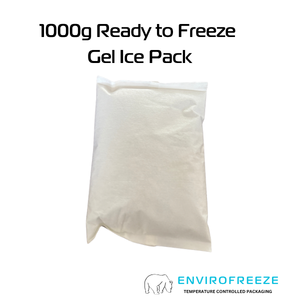
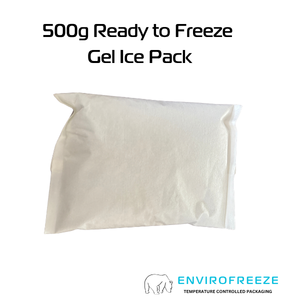
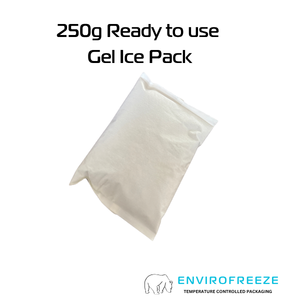
| Envirofreeze dry ice packs | Chilled food delivery (2–8°C) | Flexible when frozen, reusable, cut to size |
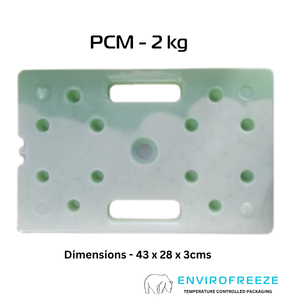
| PCM gel bricks (−18°C/−21°C) | Frozen food shipping | Maintains precise frozen temperature throughout melt cycle |
What Does “Cold Chain” Actually Mean for Food Businesses?
The cold chain is the unbroken sequence of refrigerated storage and transport that keeps temperature-sensitive food safe from production to the customer’s door. Break it — even briefly — and you create real food safety risk. For Australian food businesses, the cold chain matters at every handover point: when product leaves your facility, when it’s loaded onto a vehicle, when it arrives at a distribution centre, and when it’s delivered to the customer.
What Are the Australian Food Safety Temperature Requirements for Transport?
Under Food Standards Australia New Zealand (FSANZ) regulations, food businesses must maintain temperature control throughout the supply chain:
- Chilled perishable food: At or below 5°C during transport
- Frozen food: At −15°C or below
- Your packaging must hold these temperatures for the realistic transit time of your shipments — not just best case, but worst case when delays occur
Which Cold Chain Packaging Is Right for My Food Business?
Work through these questions before committing to a solution:
- What temperature range does the product need — chilled, ambient, or frozen?
- How long is the transit — same-day metro or 48-hour interstate road freight?
- What are the ambient conditions along the route and at the delivery end?
- Could the package sit unattended at the customer’s door for several hours?
The most common mistake is choosing based on price per unit without thinking through actual transit conditions. A solution that fails in a Queensland summer costs far more than a properly specified one.
What Is the Right Ice Pack for Food Shipping?
- Chilled (2–8°C): Envirofreeze dry ice packs — flexible when frozen, reusable, cut to any size
- Frozen (below −18°C): PCM gel bricks at −18°C or −21°C — standard gel packs freeze at 0°C and cannot maintain frozen temperatures
How Do I Know If My Cold Chain Packaging Is Working?
Test it. Pack a shipment the way you would for dispatch, include a temperature logger, and send it through your actual delivery route under worst-case conditions — summer, longest transit, package on doorstep. Check the logger when it arrives. Discovering your packaging fails during a test shipment is very different from discovering it during your busiest period.
Envirofreeze supplies insulated mailers, thermal pallet covers, dry ice packs, and PCM gel bricks Australia-wide. Contact our team → to discuss the right spec for your products and routes.