
How to Make Dry Ice at Home + Best Dry Ice Substitutes & Alternatives (Australia)
Dry ice is fascinating, useful, and sometimes surprisingly hard to get hold of in Australia. Whether you’re wondering how to make it at home, what you can use instead, or whether it’s worth the effort — this guide from Envirofreeze covers everything you need to know about making dry ice, finding alternatives, and understanding its properties.
How Do I Make Dry Ice at Home?
Technically, you can make small quantities of dry ice at home — but it requires CO₂ in compressed gas form and the right equipment. The most practical home method uses a CO₂ fire extinguisher and a pillowcase or cloth bag:
- Put on insulated gloves and eye protection
- Place the nozzle of the CO₂ extinguisher inside a cloth bag or pillowcase
- Discharge the extinguisher briefly into the bag
- The rapid expansion and cooling of CO₂ causes dry ice “snow” to form inside the bag
- Gather and compress the dry ice snow — it can be used briefly but sublimates quickly
Important: This method produces only small, short-lived quantities. Never attempt this in an enclosed space. Always wear gloves. For any practical cold chain or food shipping need, purchasing dry ice or using Envirofreeze dry ice packs is far more reliable, cost-effective, and safe.
Does CO₂ Turn Into Dry Ice?
Yes — dry ice is CO₂ in solid form. Carbon dioxide turns into dry ice when compressed and cooled sufficiently. At standard atmospheric pressure, CO₂ cannot exist as a liquid — it transitions directly between gas and solid phases. Commercial dry ice production compresses CO₂ gas under high pressure, then rapidly expands and cools it to form solid CO₂ “snow,” which is then compressed into blocks, pellets, or slabs.
Is Dry Ice Heavier Than Regular Ice?
Yes — dry ice is denser than regular ice. Regular ice has a density of approximately 0.917 g/cm³, while dry ice has a density of approximately 1.56 g/cm³ — about 70% denser. This is important to factor in for air freight where weight restrictions apply.
Is Dry Ice Hard to Get in Australia?
In major Australian cities dry ice is available, but it’s not as easy to find as regular ice. Most retailers don’t stock it, industrial gas distributors may require minimum orders or accounts, and availability can be inconsistent — particularly during peak periods. Regional and rural areas have very limited access to solid dry ice.
This is one of the reasons why businesses across Australia choose Envirofreeze dry ice packs — available online, shipped Australia-wide, and stored for months until needed.
Dry Ice vs Alternatives: Quick Comparison
| Option | Temperature | Best for | Availability |
|---|---|---|---|
| Solid dry ice | −78.5°C | Ultra-frozen shipping | Specialist suppliers |
| Envirofreeze dry ice packs | ~0°C to −5°C | Chilled & frozen shipping, first aid | Online, ships Australia-wide |
| Gel ice packs | ~0°C | Short-term chilled items | Widely available |
| Ice + salt mixture | ~−20°C | Few hours of frozen protection | DIY anywhere |
| Liquid nitrogen | −196°C | Industrial/scientific use only | Specialist only |
What Can I Substitute for Dry Ice?
1. Envirofreeze Dry Ice Packs (Best for Shipping)
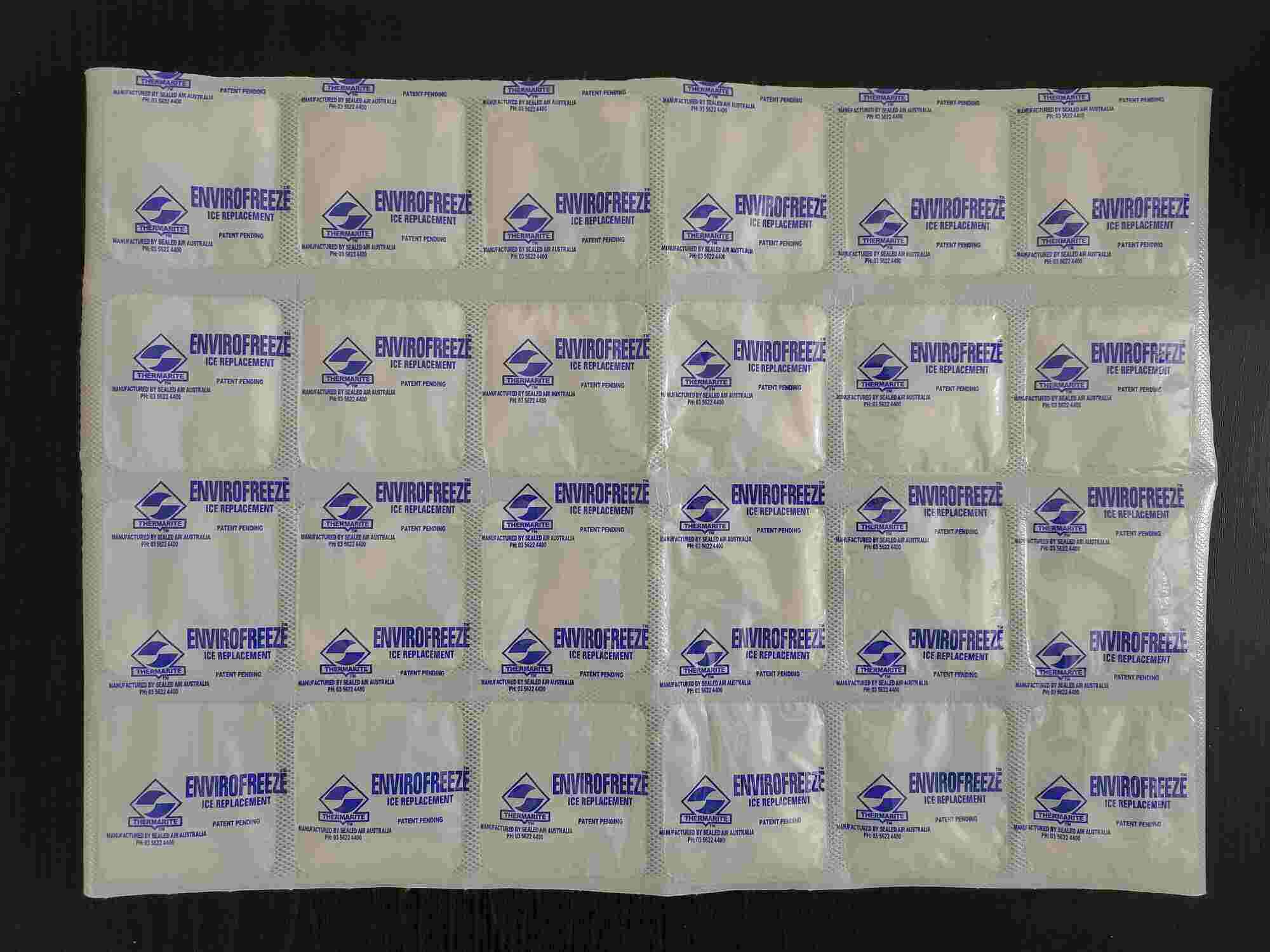
For food and pharmaceutical shipping, Envirofreeze dry ice packs activate on demand with water, stay flexible when frozen, and keep shipments at the right temperature without the hazards of solid dry ice.
2. Gel Ice Packs (Best for Casual Cooling)
Reusable gel packs work well for short-term cooling of chilled (not frozen) items. They’re widely available and safe to handle but don’t reach the ultra-low temperatures of dry ice.
3. Regular Ice + Salt Mixture
Mixing regular ice with salt lowers the freezing point to around −20°C — useful for keeping items frozen for a few hours.
What Can I Use If I Don’t Have Dry Ice?
- For shipping frozen food: Use Envirofreeze dry ice packs in an insulated box
- For an esky or camping trip: Pre-frozen gel packs or block ice last longer than crushed ice
- For first aid cryotherapy: Envirofreeze dry ice packs can be cut into strips and applied safely to injuries
- For a party/event effect: Fog machines are a safer alternative to dry ice for visual effects
Will Dry Ice Last 3 Days?
For dry ice to last 3 full days (72 hours), you’d need typically 15–20 kg or more in a high-quality insulated container with minimal opening. For 3-day shipping applications, combining Envirofreeze dry ice packs with quality insulated mailers or thermal pallet covers is often a more reliable and cost-effective solution.
Is Dry Ice Unhealthy?
Dry ice itself is not toxic — it’s simply solid CO₂. However, in enclosed spaces sublimating dry ice raises CO₂ levels causing headaches, dizziness, and in extreme cases asphyxiation. Direct skin contact causes tissue damage, and ingesting dry ice causes severe internal burns. Used correctly in well-ventilated spaces with proper PPE, dry ice is safe for legitimate cold chain applications.
The Smart Choice for Australian Businesses: Envirofreeze Dry Ice Packs
- 🐟 Seafood exporters shipping fresh and frozen product
- 🍫 Chocolate and food businesses sending temperature-sensitive products
- 💊 Pharmaceutical companies transporting medicines and specimens
- 🏥 Schools and clinics using them for first aid cryotherapy
- 📦 eCommerce businesses shipping perishables across Australia
Available in bulk packs of 20, 100, 350, and 1400 units, with Australia-wide delivery.



Add comment