Insulated Packaging for Food Delivery in Australia: What Every Business Needs to Know
The last mile is where most cold chain failures happen — and it catches a lot of food delivery businesses out, particularly in their first Australian summer. Here’s what works for insulated packaging, what doesn’t, and the most common mistakes to avoid.
What Are the Main Types of Insulated Packaging for Food Delivery in Australia?
| Type | Best for | Thermal performance | Sustainability |
|---|---|---|---|
| Foil-lined insulated mailers | Direct-to-consumer overnight chilled delivery | Good for mild conditions — varies by manufacturer | Limited recyclability |
| Wool insulated liners | Premium chilled deliveries, high-end food brands | Good for chilled, not ideal for frozen | Home-compostable |
| EPS (polystyrene) boxes | High-value perishables, interstate, frozen | Best thermal performance per cost | Not recyclable in most councils |
| Reusable insulated shippers | Subscription boxes, meal kits, B2B distribution | Best overall — lowest per-use cost at scale | Best — reusable hundreds of times |
Why Is the Last Mile So Difficult for Food Cold Chain?
In a distribution centre, temperature is controlled continuously. In a delivery van in Brisbane in January, it’s not. Every time the van door opens, warm air floods in. If a package sits on a doorstep for two hours, the ambient conditions at the door are all that’s protecting your product. The packaging has to carry the cold chain entirely on its own — sometimes far longer than the stated delivery window if there are delays or the customer isn’t home.
What Is the Best Ice Pack for Food Delivery in Australia?
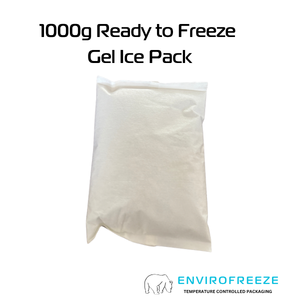
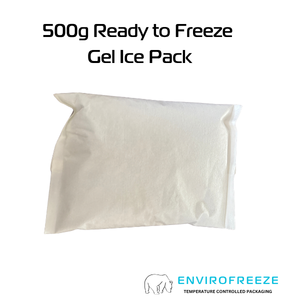
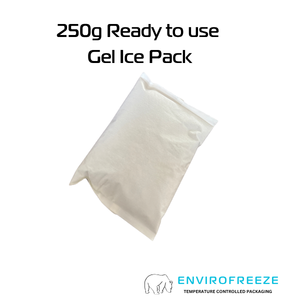
- Chilled products (2–8°C): Envirofreeze dry ice packs — activate by soaking in water and freezing, flexible to conform to the package, reusable, cut to size
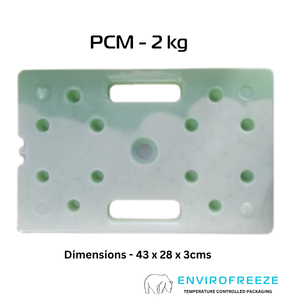
- Frozen products: PCM gel bricks at −18°C or −21°C — do NOT use standard gel packs which only freeze at 0°C and won’t maintain frozen temperatures
- Quantity guide: 200–400g of ice pack per litre of insulated volume for overnight chilled in mild conditions; 40–50% of pack weight in summer or for longer transits
What Are the Most Common Insulated Packaging Mistakes in Food Delivery?
- Air gaps inside the package: Warm air convects around the ice pack, dramatically reducing its effective life — pack tightly and fill gaps with paper or void fill
- Oversizing the mailer: A larger-than-needed box means cooling more air than necessary — match packaging size to product
- Not testing before committing: Always send a test shipment with a temperature logger through your worst-case conditions — summer, longest transit, package on doorstep — before committing at volume
- Using wrong ice packs for frozen: Standard gel packs are for chilled (2–8°C) only — use PCM at −18°C or −21°C for frozen product
Envirofreeze stocks insulated mailers, dry ice packs, and PCM gel bricks for food delivery across Australia. Contact our team → to discuss the right setup for your products and routes.