
Why Cold Chain Packaging Fails in Australia — And Why It’s Rarely the Packaging
There’s a moment that every cold chain manager dreads. The shipment arrives, the temperature logger gets downloaded, and somewhere between dispatch and delivery there’s a spike. The product is compromised. The customer is calling. And the packaging — the very packaging that passed validation — is getting blamed.
Except more often than not, the packaging isn’t actually the problem.
In our experience working with Australian food producers, pharmaceutical distributors, meal kit businesses, and cold chain logistics operators, the most common cause of temperature excursions isn’t a flawed packaging design. It’s what happens to that packaging between the validation report and the actual shipment going out the door.
Validated Packaging Is Not a Set-and-Forget Solution
When a cold chain packaging system gets validated — whether it’s a simple insulated mailer with ice packs or a full pallet configuration with PCM gel bricks — it’s tested under specific, controlled conditions. A fixed ambient temperature profile. A defined number of ice packs at a defined conditioning state. A specific payload weight and placement. A particular transit duration.
Those conditions are chosen to represent real-world scenarios. But real-world operations are messier than a validation protocol.
The validated system only performs as intended when it’s assembled and handled exactly the way it was during testing. The moment someone shortcuts the conditioning process, over-packs the box, leaves packs out of the freezer too long, or swaps one component for a similar-looking substitute, the validated performance profile no longer applies.
This is the gap between having a validated packaging solution and actually running a reliable cold chain. The packaging is just one part of it.
The Most Common Failure Points We See in Australian Cold Chain Operations
1. Ice Packs That Aren’t Conditioned Properly
This is the most frequent issue we encounter, and it’s entirely avoidable.
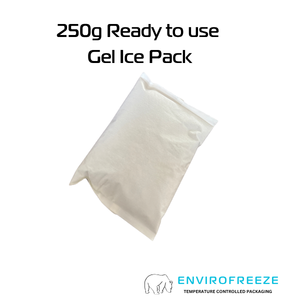
Ice packs — whether dry ice sheets or gel packs — need to reach a consistent frozen state before packing. That sounds obvious. But in a busy dispatch environment, packs get pulled from a freezer that’s been opened and closed all morning, or they were put in late the night before and haven’t fully frozen through, or they were frozen in a domestic freezer alongside food products that kept the temperature fluctuating.
A partially frozen ice pack doesn’t just perform worse than a fully frozen one — it can perform dramatically worse. The thermal mass simply isn’t there. A pack that feels frozen on the outside but is still soft in the centre has a fraction of the cold duration of a properly conditioned pack.
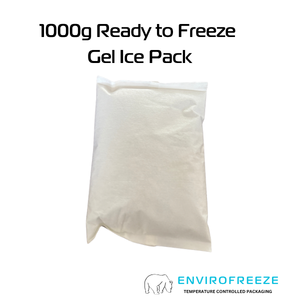
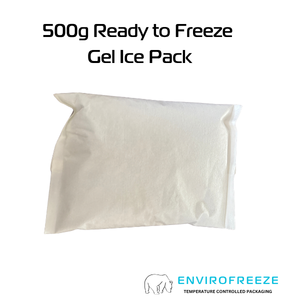
The fix is straightforward: dedicated freezer space for your ice packs, a consistent conditioning time based on your specific packs and freezer, and a process for checking conditioning state before packing. If you’re using Envirofreeze dry ice packs or Sweat Proof packs, allow adequate freeze time in a consistent freezer environment — don’t rush the conditioning step.
2. Inconsistent Pack-Out Assembly
The way ice packs are placed inside a box matters more than most people realise.
In testing, ice packs are positioned deliberately — around the payload, on specific sides, in a configuration designed to create an even cold envelope. In daily operations, that deliberate positioning often gives way to speed. Packs get thrown in wherever they fit. The payload gets placed first and the ice packs get stuffed around it. One person assembles the box differently to another.
The result is that some shipments perform well and others don’t — not because the packaging changed, but because the assembly did.
If your operation is experiencing inconsistent temperature performance across shipments that should be identical, look at your pack-out process before you look at your packaging spec. A simple visual guide or template for box assembly — showing exactly where each ice pack goes — can close this gap quickly.
3. Insulation That Gets Compromised in Handling
Insulated mailers and boxes do most of their work by creating a thermal barrier between the cold environment inside and the warm ambient environment outside. That barrier only works if it stays intact.
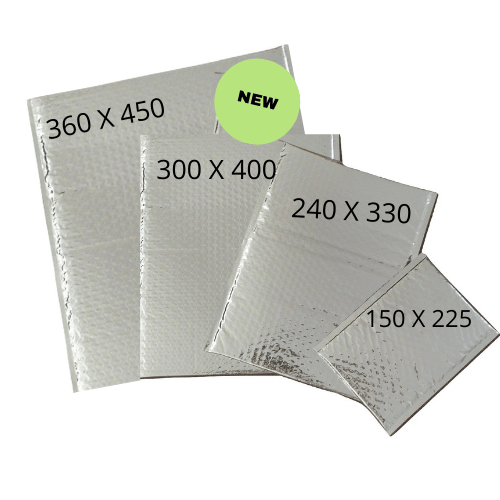
Paper-based insulation liners — which are increasingly popular for their sustainability credentials — can be particularly susceptible to handling damage. A liner that gets wet from condensation, compressed by a heavy item placed on top of the box, or torn during opening and reuse has significantly reduced insulating performance.
This doesn’t mean paper-based insulation is a poor choice. It means the handling and storage conditions for your packaging materials matter. Store insulated mailers flat, protected from moisture, and away from heavy items. Don’t reuse packaging that shows signs of compression or water damage.
Envirofreeze insulated mailers are designed for single-use cold chain applications precisely because reuse introduces too many variables. A mailer that performed perfectly on the first shipment may have absorbed enough moisture to compromise its performance on the second.
4. Transit Time Assumptions That Don’t Hold
Cold chain packaging is always validated for a specific transit duration. A system designed to hold temperature for 24 hours will not reliably hold for 36.
The problem in Australian cold chain is that transit times can vary significantly — particularly for interstate shipments, regional deliveries, or anything moving through a hub-and-spoke network over a weekend. A shipment sent on Friday afternoon may not be delivered until Monday. A next-day delivery to a regional address may take two days.
If your packaging is validated for standard overnight transit and your actual transit times vary, you either need packaging designed for longer durations, or you need to adjust your dispatch schedule to avoid scenarios where the validated duration isn’t sufficient.
Adding a temperature data logger to shipments is the most effective way to understand what’s actually happening in transit. Without data, you’re making assumptions about when and where excursions occur. With data, you can identify exactly which lanes, carriers, or time periods are causing problems — and fix the right thing.
5. Ambient Temperature Spikes During Packing
This one catches people out in Australian summers more than any other time of year.
A packaging system validated at 25°C ambient may behave very differently when it’s 38°C in the dispatch area on a January afternoon. The thermal load on the packaging is higher, the ice packs warm faster, and the buffer built into the validation protocol gets eaten up before the shipment even reaches the carrier.
For businesses shipping perishables through an Australian summer, this means either validating at higher ambient temperatures, adding ice pack quantity during hot periods, switching to a longer-duration packaging configuration, or tightening dispatch windows to avoid the hottest parts of the day.
None of these solutions require changing your packaging supplier. They require understanding how ambient temperature affects your specific system — which starts with good data from temperature loggers on representative shipments.
The Packaging Is Rarely the Problem
When a temperature excursion happens, the instinct is often to blame the ice packs or the insulated box. Sometimes that’s warranted. But more often, the investigation reveals a process issue: packs that weren’t fully frozen, a box assembled in a hurry, a shipment that sat on a loading dock in 35-degree heat for two hours before being picked up.
This matters because the fix for a packaging problem and the fix for a process problem are completely different. Changing to a higher-specification packaging system won’t help if the issue is that your ice packs are being pulled from the freezer two hours before they’re ready. It just adds cost without solving the problem.
The businesses that run the most reliable cold chains we work with in Australia aren’t necessarily using the most expensive packaging. They’re the ones with consistent processes, staff who understand why the steps matter, good data from their shipments, and the discipline to investigate excursions properly rather than just accepting them as unavoidable.
Where to Start
If you’re experiencing temperature excursions and aren’t sure where they’re coming from, here’s a practical starting point:
- Add temperature data loggers to a sample of shipments across different routes, carriers, and time periods. You need data before you can diagnose.
- Audit your conditioning process. Are your ice packs reaching a consistent frozen state before packing? What’s the freezer temperature? How long are they conditioned?
- Standardise your pack-out process. Create a simple visual guide for box assembly and make sure everyone follows it the same way.
- Check your transit time assumptions. What does your data logger tell you about actual delivery times versus what the carrier quotes?
- Account for seasonal ambient variation. If you haven’t had an excursion yet but you’re heading into an Australian summer, now is the time to stress-test your system.
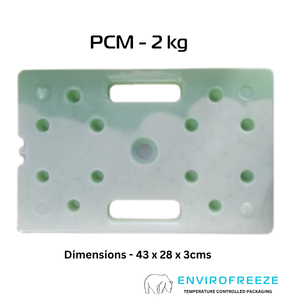
Envirofreeze supplies dry ice packs, insulated mailers, PCM gel bricks, and temperature data loggers to Australian businesses running cold chain operations. If you’re trying to get to the bottom of a temperature problem — or want to build a more reliable system before problems occur — contact us at envirofreeze@venturelabs.com.au or call 1300 282 796.


Add comment