
Cold Chain Packaging for Seafood Shipping in Australia
Seafood is one of the most demanding cold chain applications in Australia. Unlike packaged food or pharmaceuticals, fresh fish, prawns, oysters, and lobster are living — or recently living — product. A temperature excursion that might be acceptable for other chilled goods can render seafood unsaleable, and in some cases unsafe, within hours.
Whether you’re an aquaculture producer shipping live product, a distributor moving frozen prawns interstate, or an online seafood retailer delivering to residential addresses, the fundamentals of cold chain packaging for seafood are the same: keep it cold, keep it consistent, and know what happens when the transit runs longer than expected.
What Temperature Does Seafood Need During Transit?
Temperature requirements vary significantly depending on the product type and how it’s being shipped.
| Seafood Type | Required Temp | Notes |
|---|---|---|
| Fresh fish fillets | 0°C to 4°C | Shelf life degrades rapidly above 4°C — target 0-2°C for overnight transit |
| Live prawns / cooked prawns | 0°C to 4°C | Cooked prawns are particularly sensitive — ice contact acceptable |
| Fresh oysters | 4°C to 10°C | Avoid freezing — below 0°C kills oysters and destroys texture |
| Live lobster / crayfish | 8°C to 14°C | Too cold is as damaging as too warm — needs a narrow band |
| Frozen prawns / fish | Below -18°C | Partial thaw during transit causes significant quality loss even if refrozen |
| Sashimi-grade fish | -1°C to 2°C | Super-chilled — requires careful refrigerant selection to avoid freezing |
These requirements matter because they determine which type of refrigerant you use. A packaging system designed to hold 0-4°C performs very differently to one targeting -18°C, and using the wrong refrigerant is one of the most common reasons seafood arrives in poor condition.
Overnight vs 2-Day Seafood Shipments — What Changes?
The duration of transit is the most important variable in your packaging specification. A system that works perfectly for an overnight metro delivery will not reliably hold temperature for a 2-day interstate shipment, particularly in Australian summer conditions.
Overnight (up to 24 hours)
For overnight parcel delivery within the same state or metro-to-metro interstate, a quality insulated mailer or EPS box with an appropriate quantity of dry ice packs or PCM gel bricks is typically sufficient. The key variable is ambient temperature — the same pack that holds 24 hours easily in Melbourne’s winter may only hold 18 hours on a 35°C January day.
2-Day and Regional Delivery (24–48 hours)
Regional and rural deliveries routinely take 2 days or more. Dispatching on Thursday for a Friday delivery to a regional address often means the package doesn’t arrive until Monday. For any transit route that could extend beyond 24 hours, your packaging needs to be specified for the worst-case duration — not the expected one.
Practical options for extended duration: increase refrigerant mass, upgrade to a thicker-walled insulated box, switch from standard gel packs to PCM gel bricks at the target temperature, or adjust dispatch days to avoid the Friday problem.
Which Packaging Products Do You Need?
Dry Ice Packs — For Chilled Fresh Seafood
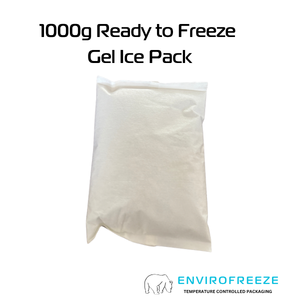
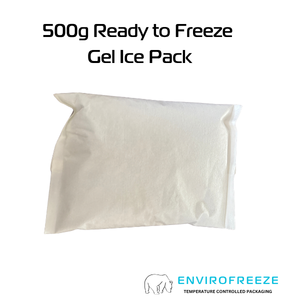
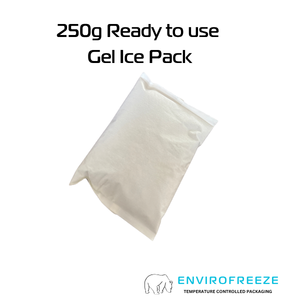
Envirofreeze dry ice packs are water-activated polymer ice sheets that freeze at 0°C and stay flexible when frozen. They’re the right choice for chilled fresh seafood (fish, prawns, cooked seafood) that needs to stay at 0-4°C. Their flexibility means they conform to irregular product shapes — useful when packing around whole fish or loose prawns in a bag.
For seafood applications, the key advantage is consistency: unlike block ice or loose ice, dry ice packs don’t melt into water that can pool in the box, they maintain a consistent surface temperature, and they’re available in bulk quantities that make high-volume operations practical. They can also be placed in direct contact with packaged seafood without the risk of freezer burn that solid ice contact can cause.
PCM Gel Bricks — For Frozen Seafood at -18°C
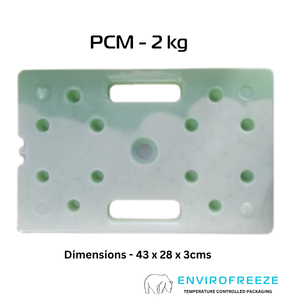
For frozen prawns, frozen fish, and other products that need to stay below -18°C, PCM gel bricks formulated at -18°C or -21°C are the correct refrigerant. Standard dry ice packs or chilled gel packs freeze at 0°C — they are not suitable for frozen product and will not maintain the -18°C target temperature needed.
PCM gel bricks are fully reusable, making them cost-effective at volume. They have no dangerous goods classification for air freight (unlike solid dry ice), which matters for exporters moving product by air.
Insulated Mailers — For Parcel-Size Shipments
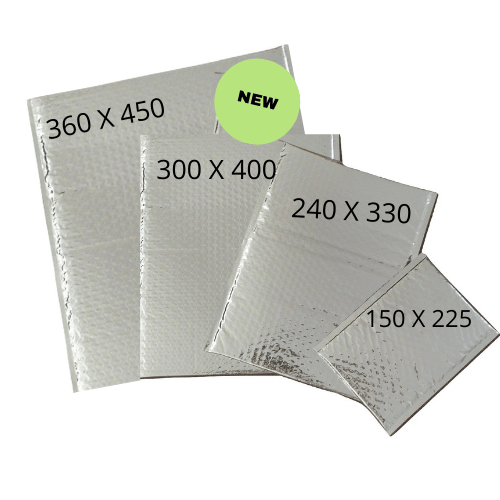
Insulated mailers are the right outer packaging for parcel-size seafood shipments — typically 1-5 kg of product. They provide the thermal barrier that keeps the refrigerant working efficiently. The insulation quality (wall thickness and material) directly determines how long your refrigerant holds temperature, so it’s worth matching the mailer specification to your transit time requirement rather than using the cheapest option available.
Thermal Pallet Covers — For Pallet-Scale Seafood Distribution
For exporters, wholesalers, and distributors moving pallets of seafood, thermal pallet covers provide an insulating blanket over the entire pallet during loading dock exposure — the period when pallets are most vulnerable to temperature excursion. Loading docks in Australian summers can exceed 35°C, and pallets waiting for vehicle loading can experience significant heat ingress without protection.
Temperature Data Loggers — For Chain of Custody
Temperature data loggers provide a downloadable record of the temperature profile throughout transit. For premium seafood — sashimi-grade tuna, live lobster, export-grade rock lobster — this data is increasingly expected by buyers as proof that cold chain integrity was maintained. A logger also tells you exactly when and where a temperature excursion occurred, which is the only way to distinguish a packaging failure from a carrier failure.
Australian Summer — What You Need to Know
Australian summer ambient temperatures put significant additional load on cold chain packaging. A system validated at 25°C ambient that holds 24 hours may only hold 16-18 hours when the ambient temperature at the dispatch facility reaches 35-38°C.
Practical summer adjustments for seafood shippers:
- Increase refrigerant quantity — more ice pack mass means longer duration at high ambient temperatures
- Dispatch earlier in the day — avoid packing and dispatching in the hottest part of the afternoon
- Tighten transit day restrictions — consider not dispatching on Thursdays if your Friday deliveries might carry over to Monday in the heat
- Use thicker insulation — a higher R-value mailer pays for itself in reduced losses during summer months
- Test your system in summer conditions — don’t assume winter performance translates to summer
Bulk Ordering for Seafood Exporters and Distributors
Seafood businesses typically operate at volumes that make bulk packaging purchasing significantly more cost-effective than buying in small quantities. Envirofreeze supplies dry ice packs in 100-pack, 350-pack, 700-pack, and 1400-pack quantities, with pricing that scales at volume. PCM gel bricks and insulated mailers are similarly available in bulk.
For businesses with regular, predictable volume, we can set up an account and discuss forward ordering arrangements that ensure supply is available before peak seasons — Christmas, Easter, and summer holiday periods when seafood demand spikes and packaging supply can tighten.
To discuss your seafood shipping requirements, contact the Envirofreeze team on 1300 282 796 or email envirofreeze@venturelabs.com.au. We supply seafood businesses across all Australian states and territories.
Related Reading
- Can I Ship Frozen Food Without It Melting? A Practical Australian Guide
- How Much Does It Cost to Ship Temperature-Sensitive Products in Australia?
- Phase Change Materials for Cold Chain Management in Australia
- Temperature Data Loggers for Shipping in Australia
- Why Cold Chain Packaging Fails in Australia — And Why It’s Rarely the Packaging

Add comment