
Cold Chain Packaging for Meal Kit Delivery in Australia
Meal kit delivery sits at an unusually difficult intersection of cold chain requirements: a single box may contain raw protein that needs to stay at 0-4°C, dairy that tolerates slightly warmer temperatures, produce that must not freeze, and a sauce sachet or two that really doesn’t care either way. The packaging has to keep all of them within acceptable ranges simultaneously — through a transit that might take 6 hours to a metro suburb or 36 hours to a regional address.
Getting this right at small scale is straightforward. Getting it right at scale, with consistent results across all delivery zones and all seasons, is where most meal kit businesses run into problems. This guide covers the cold chain packaging fundamentals for Australian meal kit and direct-to-consumer food businesses.
Why Meal Kit Delivery Is a Cold Chain Problem
Unlike a distribution centre shipping to a retailer, meal kit delivery goes to residential addresses. The box may sit on a doorstep for several hours after delivery if the customer is out. It may be handed to a neighbour. It may be left in direct sun in a western-facing entry. The cold chain doesn’t end when the courier delivers — it ends when the customer opens the box, which could be hours later.
This “last-metre” exposure is the most unpredictable part of the meal kit cold chain, and your packaging needs to account for it. A box that holds temperature through transit but fails in the 3 hours it sits on a doorstep in a Brisbane January is still a failed cold chain.
What Temperature Do Meal Kit Components Need?
Different components in a meal kit have different temperature requirements, and not all of them align neatly.
| Component | Required Temp | Notes |
|---|---|---|
| Raw chicken / pork | 0°C to 4°C | Most temperature-sensitive item — specs the entire box |
| Raw beef / lamb | 0°C to 5°C | Slightly more tolerant, still specs the box |
| Fish / seafood | 0°C to 4°C | Same as chicken — deteriorates rapidly above 4°C |
| Dairy (milk, cream, cheese) | 0°C to 8°C | Wider band — doesn’t spec the box if protein is present |
| Fresh produce | 2°C to 10°C | Avoid freezing — chilling injury can damage leaves and herbs |
| Eggs | 5°C to 15°C | Australian food standards allow ambient storage — usually not a concern |
| Sauces / condiments | Ambient to 15°C | Shelf-stable sachets — not a cold chain concern |
In practice, the raw protein specs the entire box. If you have chicken in the kit, the whole box needs to hold 0-4°C through the entire transit window, including the doorstep dwell time. The other components are generally fine within that range, with the exception of very cold-sensitive produce like fresh herbs, which can show chilling damage at temperatures close to 0°C — worth keeping in mind when placing delicate herbs directly against ice packs.
The Packaging Stack — What Goes in a Meal Kit Box?
Insulated Boxes and Mailers
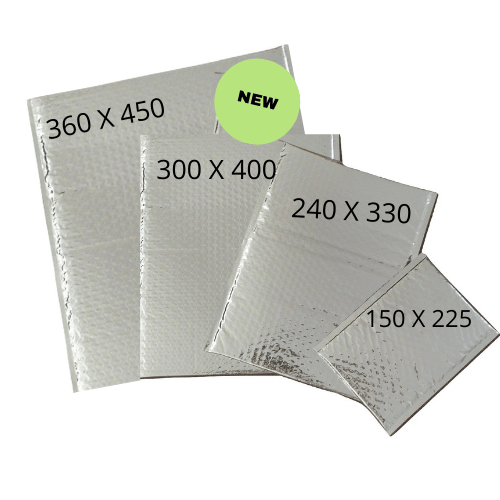
The outer insulated container is the primary thermal barrier. For meal kits, the options are EPS (expanded polystyrene) boxes, which provide excellent insulation at low cost but are bulky to store and create disposal issues for customers, and insulated mailers, which use foil-lined reflective or foam-based insulation in a flat-pack format that stores efficiently and is easier for customers to deal with at the end.
The right choice depends on your delivery window and ambient temperatures. EPS boxes outperform insulated mailers in thermal holdover time — relevant for 2-day regional deliveries or peak summer. Insulated mailers are often sufficient for 24-hour metro deliveries in mild conditions and create less friction for customers on the disposal side.
Dry Ice Packs — For Flexible, Protein-Compatible Cooling
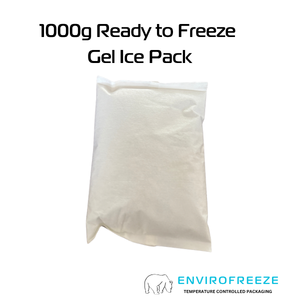
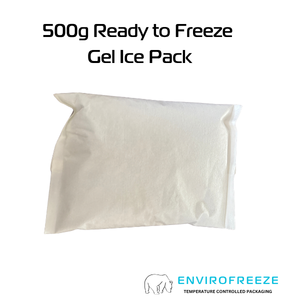
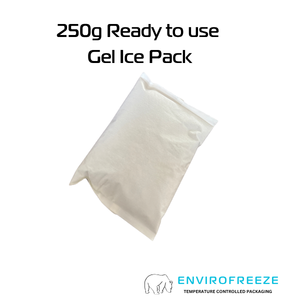
Dry ice packs — water-activated polymer ice sheets that freeze at 0°C and stay flexible — are well suited to meal kit applications. Because they’re flexible, they conform around vacuum-sealed proteins, sit flat between layers of product, and don’t melt into free water, which matters when produce is sharing the box. Available in bulk quantities that suit high-volume production days.
For a standard 2-meal, 2-person kit targeting 24-hour transit, the typical starting point is 3-4 appropriately sized dry ice packs positioned to surround the protein. Always validate by testing your specific box configuration at the ambient temperatures of your delivery zones — particularly before summer.
PCM Gel Bricks — For Extended Transit or Premium Kits
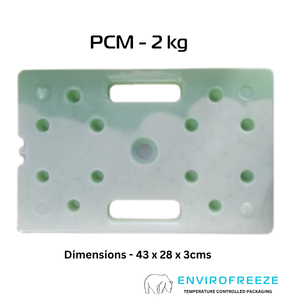
PCM gel bricks at 0°C or 4°C hold temperature longer than standard dry ice packs because they release heat through a phase change rather than simply warming up. This makes them more effective for 2-day regional deliveries or premium kits where the brand expectation is that product is cold no matter what. They’re heavier and more expensive per unit, but fully reusable — relevant if you operate a returns program or use them within a distribution facility rather than shipping one-way.
Overnight vs 2-Day Delivery — What Changes?
For metro overnight delivery, a well-specified insulated mailer with the right quantity of dry ice packs is typically sufficient year-round (with a summer spec increase). For regional and rural addresses where delivery extends to 2 days or more, you need to either upgrade the insulation, increase refrigerant mass significantly, or both. A common mistake is using the same packaging spec for all delivery zones regardless of transit time.
The practical solution most meal kit businesses land on is a tiered system: a lighter spec for same-day or next-day metro deliveries and a heavier spec for regional orders — triggered by postcode at checkout. This adds complexity but protects margins by not over-packing short-transit orders.
Australian Summer — The High-Stakes Season
Summer is when meal kit cold chain failures cluster. Ambient temperatures above 35°C put significant extra load on packaging, delivery vehicles may not be refrigerated, and doorstep dwell times in the afternoon heat are the most damaging scenario your packaging faces.
Practical summer adjustments: increase ice pack quantity by 25-50% from your mild-weather spec, tighten delivery day restrictions (avoid Thursday dispatch if Friday delivery could slide to Monday), move dispatch to early morning, and consider whether your current insulated mailer spec is sufficient or whether you need to move to a thicker-walled box for the November-March period.
High-Volume and Custom Packaging for Meal Kit Businesses
Meal kit businesses typically run high production volumes on 2-3 dispatch days per week, which means packaging procurement needs to be reliable and available in volume. Envirofreeze supplies dry ice packs in quantities from 100 to 1400 packs, with PCM gel bricks and insulated mailers available in equivalent bulk.
For businesses with predictable weekly volume, we can discuss forward ordering to ensure supply is confirmed ahead of peak demand periods — Christmas boxes, seasonal menu launches, and the summer period when packaging demand across the industry tends to spike simultaneously.
To discuss your meal kit packaging requirements, contact the Envirofreeze team on 1300 282 796 or email envirofreeze@venturelabs.com.au.

Add comment