
How to Ship Meat Interstate in Australia
Shipping meat interstate in Australia is one of the most unforgiving cold chain applications for a small business. The margin for error is narrow — fresh meat held above 5°C for more than a few hours begins deteriorating, and frozen meat that partially thaws and refreezes suffers quality loss that’s immediately obvious to the customer. At the same time, the Australian parcel network is not designed around food safety, and transit times can vary.
This guide is for online butchers, farm-direct meat businesses, charcuterie producers, and anyone else shipping fresh or frozen meat to customers across state lines. It covers the packaging you need, the temperature specs that matter, and the operational decisions that determine whether your product arrives in the condition it left in.
Temperature Requirements for Meat in Transit
The temperature requirement for meat in transit is set by food safety law, not by preference. Under FSANZ (Food Standards Australia New Zealand) Standard 3.2.2, potentially hazardous foods including raw meat must be kept at or below 5°C or at or above 60°C during transport. In practice, for cold chain shipping, the target is 0°C to 4°C for fresh meat.
| Meat Type | Required Temp | Notes |
|---|---|---|
| Fresh beef, lamb, pork | 0°C to 4°C | FSANZ requires below 5°C — target 0-3°C for transit buffer |
| Fresh poultry (chicken, duck) | 0°C to 4°C | Most perishable — no room for temperature buffer |
| Fresh fish and seafood | 0°C to 4°C | Deteriorates faster than red meat at same temperature |
| Charcuterie / cured meats | 0°C to 10°C | Curing extends tolerance — check your specific product |
| Frozen meat | Below -18°C | Partial thaw causes visible ice crystal damage |
| Marinated / value-added | 0°C to 4°C | Treat as fresh meat — marinades don’t extend temperature tolerance |
One important note on frozen meat: the target isn’t just “keep it frozen” — it’s keep it below -18°C. Partial thawing that occurs when packaging underperforms doesn’t just create food safety risk, it creates visible ice crystal damage in the muscle fibres that customers recognise immediately and associate with poor quality or mishandling.
Fresh Meat vs Frozen Meat — Different Problems, Different Packaging
Fresh and frozen meat have fundamentally different packaging requirements, and the same packaging system won’t work for both.
Fresh Meat (0–4°C Target)
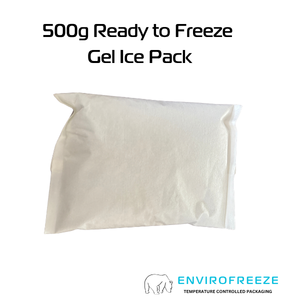
For fresh meat, the job of the packaging is to maintain 0-4°C from the moment it leaves your cool room to the moment the customer opens the box. Dry ice packs — flexible polymer ice sheets that freeze at 0°C — are well suited to fresh meat. They hold the right temperature, stay flexible so they conform around vacuum-sealed cuts, and don’t melt into free water that could compromise packaging integrity or create a mess for customers.
The quantity of ice packs needed depends on box size, ambient temperature, and transit time. For overnight metro delivery in mild conditions, 3-4 packs surrounding the meat is a reasonable starting point. In summer, increase this by 30-50% and test before committing to a specification for the season.
Frozen Meat (Below -18°C Target)
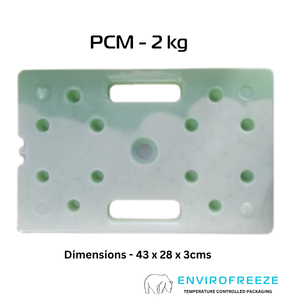
For frozen meat, standard dry ice packs freeze at 0°C — they’re designed for chilled applications, not frozen. To maintain frozen temperatures during transit, you need PCM gel bricks formulated at -18°C or -21°C. These absorb heat through a phase change at the target temperature, providing significantly longer holdover than standard ice packs.
PCM gel bricks at -18°C are fully reusable, have no dangerous goods classification (unlike solid dry ice), and are available in bulk. They need to be pre-frozen to their phase change temperature before use — this requires a freezer capable of reaching -21°C or below, which most commercial operations have access to.
Overnight vs 2-Day Interstate Transit
Most capital city to capital city routes are overnight via express parcel services. Sydney to Melbourne, Melbourne to Brisbane, Perth to Adelaide — these are standard overnight routes in the major carrier networks. The reality, however, is that overnight is not guaranteed, and the difference between a 20-hour and 30-hour transit can determine whether fresh meat arrives in good condition or not.
Regional deliveries routinely take 2 days or more. A customer in Bendigo, Toowoomba, Bunbury, or any regional town is very unlikely to receive a parcel in under 24 hours, and 36-48 hours is common. The practical implication is that you need to decide, by postcode, whether you can reliably ship to a given region with your current packaging, and what your refund/replacement policy is if you can’t.
Many online butchers restrict fresh meat shipping to metro areas only and offer frozen-only options for regional customers. This is a sensible operational boundary — it’s far better than shipping fresh meat to a regional address in summer and bearing the cost of a customer complaint and replacement.
Vacuum Sealing — Essential, Not Optional
Vacuum sealing meat before shipping serves multiple purposes. It extends shelf life by removing oxygen, it prevents cross-contamination between cuts in the same box, it creates a clean surface for ice packs to contact, and it prevents the meat from sitting in its own liquid during transit — which accelerates temperature rise and creates a mess. If you’re not vacuum sealing your meat before shipping, start there before optimising your packaging spec.
The Summer Problem
Australian summers create conditions that are hostile to meat shipping. Ambient temperatures in courier vehicles, at loading docks, and on doorsteps can reach 35-40°C. A packaging system that reliably delivers fresh meat in May may fail in January with the same specification.
Practical summer adjustments for meat shippers: increase ice pack volume by at least 30%, switch from insulated mailers to EPS boxes for regional deliveries, cut off fresh meat shipping to regional addresses, dispatch early in the day to avoid afternoon heat, and consider pausing DTC fresh meat shipping during extended heat events (forecast 3+ days above 38°C in destination city).
Insulated Packaging Options
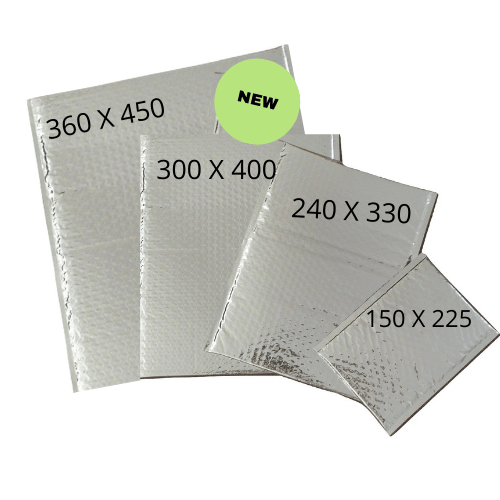
Insulated mailers with foil-lined insulation work well for most overnight metro fresh meat deliveries in mild to moderate conditions. For frozen meat, 2-day deliveries, or any summer regional shipment, an EPS box with a higher wall thickness provides significantly better thermal performance.
The insulated container is the thermal barrier that determines how long your refrigerant works. A high-quality insulated box with the right PCM gel brick load will outperform a basic mailer with twice the ice packs. Match your container quality to your transit time, not just your product weight.
Bulk Ordering for Meat Businesses
Meat businesses tend to dispatch on specific days — often Tuesday through Thursday to avoid weekend warehouse delays — which creates predictable, high-volume packaging demand on those days. Envirofreeze supplies dry ice packs in 100 to 1400-pack quantities and PCM gel bricks in equivalent bulk, with pricing that scales at volume.
For businesses with regular weekly dispatch volumes, forward ordering ensures supply is available before seasonal peaks — Christmas, Easter, and Father’s Day are the highest volume periods for online meat businesses, and packaging supply can tighten across the industry at exactly those times.
To discuss your meat shipping packaging requirements, contact the Envirofreeze team on 1300 282 796 or email envirofreeze@venturelabs.com.au.
Related Reading
- Cold Chain Packaging for Seafood Shipping in Australia
- Can I Ship Frozen Food Without It Melting? A Practical Australian Guide
- Cold Chain Packaging for Food Businesses in Australia
- How Much Does It Cost to Ship Temperature-Sensitive Products in Australia?
- The True Cost of Cold Chain Failure in Australia



Add comment