Cold Chain Packaging for Pharmaceutical and Vaccine Distribution in Australia
Pharmaceutical cold chain is the most demanding form of temperature-controlled logistics in Australia, and for good reason. A single temperature excursion can render a batch of vaccines clinically unusable, compromise a patient’s insulin, or trigger the destruction of biologics worth tens of thousands of dollars. Unlike food, where a breach may reduce quality, a breach in the pharmaceutical cold chain can directly affect patient safety and carries a regulatory obligation to investigate and document. For distribution managers, quality managers, procurement teams, and dispensing pharmacists, the stakes are high across three dimensions at once: regulatory compliance, patient safety, and product cost. This guide covers what Australian pharmaceutical distributors and healthcare providers need to know to specify cold chain packaging correctly, from temperature requirements and compliance context through to the products that keep medicines within range from warehouse to community pharmacy.
Temperature Requirements for Pharmaceutical Products
Different pharmaceutical classes carry different temperature specifications, and the packaging must be matched to the product — not the other way around. The table below summarises the ranges most commonly encountered in Australian pharmaceutical distribution.
| Product class | Required range | Key risk | Recommended coolant |
|---|---|---|---|
| Vaccines (most) | 2–8°C | Freezing irreversibly damages many adjuvanted and protein-based vaccines | PCM formulated to +2°C / +4°C |
| Biologics & monoclonal antibodies | 2–8°C | Aggregation and loss of potency outside range | PCM formulated to +4°C |
| Insulin | 2–8°C (in-use up to 25°C) | Loss of glycaemic control if frozen or overheated | PCM formulated to +4°C |
| Cytotoxics & injectables | 2–8°C or 15–25°C | Stability and handling/containment requirements | PCM +4°C or insulated ambient |
| Frozen plasma & some mRNA products | −20°C to −30°C (or lower) | Maintaining deep-frozen state through transit | PCM at −18°C / −21°C or dry ice |
The 2–8°C band is where most day-to-day pharmaceutical distribution happens, and it is deceptively difficult. The challenge is not keeping products cold — it is keeping them cold without letting them freeze. Standard gel packs freeze at 0°C, which can drag adjacent product below the 2°C floor and destroy freeze-sensitive vaccines and biologics. This is why phase change materials (PCM) engineered to change state at 2°C or 4°C have become the standard for refrigerated pharmaceutical applications: while melting, they hold close to their set point, buffering the payload safely inside the 2–8°C window.
TGA and WHO Cold Chain Compliance Context
Pharmaceutical cold chain in Australia operates within a defined regulatory framework. The following is general context to help you frame your own compliance obligations; it is not legal or regulatory advice, and your quality team should confirm what applies to your specific goods and licences.
- TGA Good Distribution Practice (GDP) — Australia’s Therapeutic Goods Administration expects therapeutic goods to be stored and distributed under validated conditions, with calibrated temperature monitoring, documented records, and defined procedures for handling excursions.
- Australian code and guidance — guidance such as the Australian Code of Good Wholesaling Practice for Medicines and standards covering temperature-sensitive medicines set expectations for validation, monitoring and documentation across the distribution chain.
- WHO cold chain principles — the World Health Organization’s guidance on the storage and transport of time- and temperature-sensitive pharmaceutical products informs global best practice, including qualification of shipping systems and continuous temperature monitoring, and is widely referenced by Australian distributors.
- IATA Dangerous Goods Regulations — where dry ice is used for frozen air freight, quantity limits, labelling and documentation obligations apply. Switching to PCM for 2–8°C lanes removes this dangerous-goods burden entirely.
The practical takeaway is consistent across all of these: temperature control must be validated, continuously monitored, and documented. Packaging and monitoring are not separate purchases — they are two halves of a single compliant system.
Which Envirofreeze Products to Use
PCM Gel Bricks at 2°C and 4°C
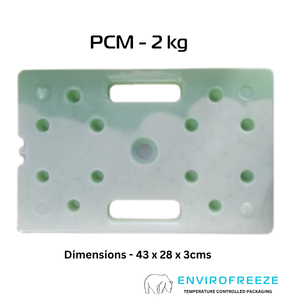
For the 2–8°C range that dominates vaccine, biologic and insulin distribution, Cryophase PCM gel bricks formulated to +2°C and +4°C are the correct choice. Because they change phase within the target band, they hold the payload near their set point rather than pulling it toward 0°C the way water-based gel packs do — protecting freeze-sensitive product while still delivering long hold times. For frozen lanes, PCM is also available at −18°C and −21°C.
Insulated Mailers and EPS Boxes for Last-Mile Delivery
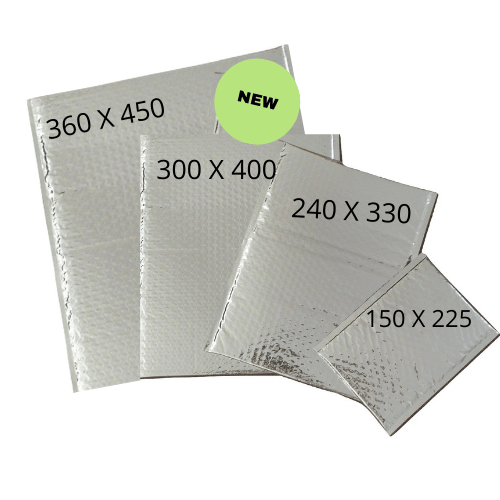
Insulated mailers and EPS (expanded polystyrene) boxes provide the thermal envelope that keeps PCM working. Mailers suit parcel and courier delivery of single or small-quantity pharmaceutical orders, while rigid EPS boxes suit higher-value or higher-volume consignments that need a more robust, better-validated envelope. Matching box wall thickness and PCM quantity to the transit duration and ambient conditions is the core of a qualified shipping system.
Temperature Data Loggers
For pharmaceutical shipments, temperature monitoring is effectively mandatory as part of chain-of-custody documentation. Every temperature-sensitive consignment should carry a calibrated temperature data logger that records continuously and produces a tamper-evident report on delivery. Look for calibration traceable to recognised standards, PDF and CSV reporting, and configurable alarm thresholds. Single-use loggers suit one-way distribution to pharmacies and clinics; multi-use loggers reduce per-shipment cost on closed distribution loops such as hospital networks.
Thermal Pallet Covers for Pallet-Scale Distribution
When distribution moves to pallet scale — bulk deliveries to hospital pharmacies, wholesaler cross-docks, or regional distribution centres — thermal pallet covers protect an entire pallet of product during loading, staging and transit. They are the practical answer to the vulnerable moments when product sits on a loading dock or transfers between vehicles, where much of the real-world temperature risk occurs.
Last-Mile Delivery to Pharmacies, Clinics and Aged Care
The last mile is where pharmaceutical cold chains most often fail. Deliveries to community pharmacies, GP clinics and aged care facilities are typically small, frequent, and routed through general couriers rather than dedicated refrigerated vehicles. Product may sit in a hot delivery van in an Australian summer, be left at a reception desk before it reaches the fridge, or travel long distances to regional and remote sites. These conditions are exactly where a correctly specified insulated mailer plus PCM earns its keep — the payload stays within range regardless of what happens to the outside of the box, and the enclosed data logger provides proof of that on arrival. For freeze-sensitive vaccines, the freeze protection of a 2°C or 4°C PCM is as important as the heat protection, since a package left on a cold night can breach the lower limit just as easily as a hot van breaches the upper one.
Cold Chain Validation and Temperature Mapping
A compliant shipping system is one that has been validated, not simply assembled. Before a packaging configuration is put into routine use, it should be qualified against representative worst-case conditions — summer and winter ambient profiles, expected transit durations, and realistic handling delays — with temperature mapping to confirm the payload stays in range at every point inside the box. Once qualified, that configuration (box type, PCM quantity and conditioning, pack-out arrangement) should be documented and followed consistently, with periodic re-validation. Envirofreeze can supply the packaging components and loggers needed to run these qualification studies; your quality team defines the acceptance criteria.
Bulk Ordering for Distributors, Hospital Networks and Wholesalers
Pharmaceutical distributors, hospital and health-service networks, and pharmaceutical wholesalers typically standardise on a small set of validated packaging configurations and order them in volume. Envirofreeze supports bulk and recurring supply of PCM bricks, insulated mailers, EPS boxes, thermal pallet covers and data loggers, so procurement teams can consolidate their cold chain consumables with a single Australian supplier and keep qualified configurations in stock. Standardising components across a network also simplifies validation, training and troubleshooting.
Talk to Envirofreeze About Your Pharmaceutical Cold Chain
If you are specifying or reviewing cold chain packaging for medicines, vaccines or biologics, the Envirofreeze team can help you match PCM, insulation and monitoring to your products and transit lanes. Call 1300 282 796 or email envirofreeze@venturelabs.com.au to discuss your requirements or request bulk pricing.

Add comment