

How Often Should You Use Ice Packs on Your Knee?
Knee injuries are one of those things that seem straightforward to treat but are actually really easy to get wrong. Ice it too much and you risk skin damage or interfering with the healing process. Ice it too little and the swelling gets away from you in those first critical hours.
After years of supplying ice packs to physiotherapists, sports clubs, schools, and first aid rooms across Australia, here’s what actually works.
The Simple Answer First
For an acute knee injury — a sprain, a knock, swelling after surgery, or a strain — ice for 15 to 20 minutes, then leave it off for at least 40 minutes before icing again. In the first 24 to 48 hours you can do this every one to two hours while you’re awake. After that, drop back to three to four times a day until the swelling settles.
That’s the core of it. Everything else below is context to help you understand why — and to help you adjust based on your specific situation.
Why Timing Actually Matters
When you ice a knee, you’re causing the blood vessels around the joint to constrict. That’s what limits swelling — less blood flow means less fluid leaking into the surrounding tissue. It also slows down pain signals reaching your brain, which is why it feels better almost immediately.
But here’s the thing people miss: you can’t just leave the ice on indefinitely and expect better results. After about 20 minutes, the vessels start to dilate again as your body works to protect the tissue from the cold. Leaving ice on beyond that point doesn’t add benefit — and it can start to cause superficial skin irritation or, in extreme cases, a form of freeze burn.
The 40-minute gap between applications lets your skin return to normal temperature before you apply cold again. It’s not an arbitrary number — it’s just enough time for everything to reset without losing the benefit of the previous application.
The First 48 Hours Are the Most Important
If you’ve just twisted your knee, copped a knock on the oval, or had surgery, those first two days are when icing makes the biggest difference. Swelling peaks in the first 24 to 48 hours for most soft tissue injuries, and getting on top of it early means a faster and more comfortable recovery.
During this window, aim for:
- Ice on for 15–20 minutes
- Off for at least 40 minutes
- Repeat up to every hour if you can manage it while awake
- Keep the leg elevated when you can — feet up above heart level
- Add compression with a bandage if there’s significant swelling
You don’t need to wake up through the night to ice it. Sleep is when your body does its best healing work — don’t interrupt that.
After 48 Hours — Ease Off
Once the initial acute phase is over, you don’t need to be icing every hour. Most people find that three or four applications a day is enough to stay comfortable and keep residual swelling in check.
If the knee is still very swollen and hot to touch after 72 hours, keep icing and get it looked at by a physio or GP — that’s a sign the inflammation is more significant than a minor sprain.
If the swelling has settled and you’re left with stiffness and achiness, that’s actually a situation where heat starts to become more useful than ice. Heat promotes blood flow and helps muscles relax — which is exactly what you want once the acute inflammatory phase has passed.
What Kind of Ice Pack Works Best for a Knee?
This matters more than people realise. A rigid gel pack pressed against the rounded contours of a knee doesn’t make great contact — there are gaps where the cold isn’t getting through properly.
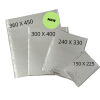
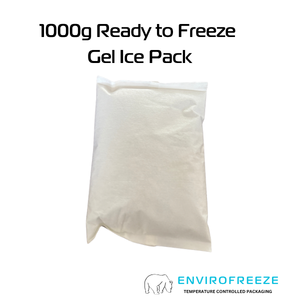
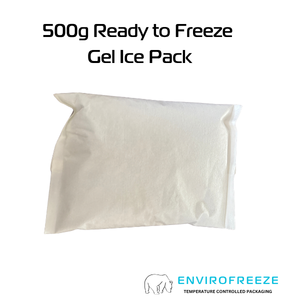
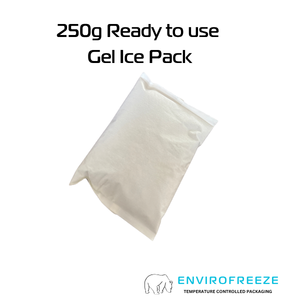
What works best is something flexible that conforms to the knee. Envirofreeze dry ice packs are a soak-and-freeze sheet that stays flexible when frozen, moulds to the shape of the knee, and gives consistent contact across the whole joint. You can also cut them to size — useful if you want a piece that wraps just around the kneecap versus a full sheet that covers the whole joint.
Whatever you use, always put a thin cloth between the pack and your skin. A tea towel, light bandage, or even a piece of paper towel is enough. Frozen material applied directly to bare skin can cause freeze burn, especially if left on too long.
Post-Surgery Knees Are a Bit Different
If you’ve had knee surgery — a reconstruction, meniscus repair, or knee replacement — your surgeon or physio will give you specific icing instructions. Generally the same principles apply (15–20 minutes on, 40 minutes off), but the frequency, duration, and timing relative to exercises will be guided by your rehab protocol.
One thing that’s consistent across most post-surgical rehab: icing after exercise sessions helps significantly with managing the reactive swelling that often follows physiotherapy exercises. Ice after every session, even well into the rehab process, and you’ll recover more comfortably.
When to Stop Icing and See Someone
Ice is a first aid tool, not a treatment in itself. If after two or three days of diligent icing, rest, and elevation your knee is still significantly swollen, painful to bear weight on, or feels unstable — stop self-managing and get it properly assessed.
There’s no point icing a knee injury for a week when what you actually need is an X-ray or MRI to rule out a structural problem.
Quick Reference
| Phase | Frequency | Duration per session |
|---|---|---|
| First 48 hours (acute) | Every 1–2 hours while awake | 15–20 minutes |
| Days 3–7 | 3–4 times daily | 15–20 minutes |
| After swelling settles | After activity / as needed | 15–20 minutes |
| Post-surgery rehab | After each physio session | As directed by physio |
If you’re stocking your school, sports club, workplace, or home first aid kit with ice packs, our dry ice packs are reusable, flexible, and come in bulk pack sizes that make the most sense for regular use. Any questions about the right size or quantity for your setup, give us a call on 1300 282 796.


Add comment